
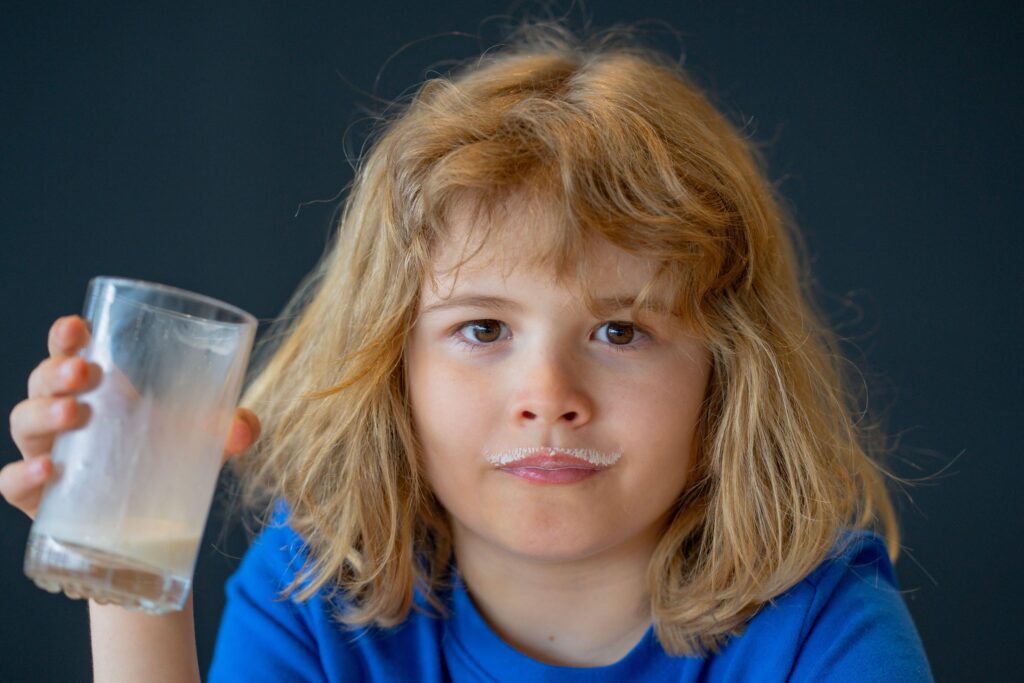
Free milk for Welsh primary school children, provided under a scheme running since 1977, could be withdrawn as ministers decide whether to replace it or scrap it altogether.
According to BBC Wales, the Rural Payments Agency, the UK government body that has run the School Milk Subsidy Scheme (SMSS), will stop doing so from April next year. That leaves the Welsh Government to decide what comes next, and a public consultation is now under way.
The two options
The Welsh Government is looking at:
- Bringing in a new grant-funded model to keep milk in schools
- Discontinuing the scheme, on the basis that children can get milk through free school meals and breakfast provision
In its own assessment, the Welsh Government said pupils “would continue to have opportunities to access milk through existing school breakfast and lunch provision, although access would depend on participation in those services”.
It accepted that ending the scheme could hurt rural businesses and dairy communities. However, it said the size of any impact was unclear. That would depend on how far schools and councils offer milk through their existing food schemes, and on how heavily Welsh dairies rely on income from the scheme.
Cabinet Minister for Education and the Welsh Language Anna Brychan said: “Milk has long played a part in supporting the health and well-being of our youngest learners.”
She said she wanted any decision on the scheme’s future to rest on the “fullest possible evidence”, and urged “everyone with a view on this issue to take part in the consultation”.
How the scheme works today
The SMSS has been the route for getting free milk into Welsh schools since 1977, covering children aged four to 11. In schools that take part, full-time pupils from reception to year two receive milk free of charge, while those in years three to six get it at a subsidised price.
EU funding for the scheme was cut in 2001, and the UK and devolved governments responded with a national top-up. In Wales this was delivered through the School Milk (Wales) Regulations 2008. The scheme carried on after the UK left the EU following the 2016 referendum.
Farmers’ warning
NFU Cymru said ending the scheme would be “extremely disappointing”.
Its president, Abi Reader, a third generation dairy farmer, said:
“We should be encouraging children to understand and value the food produced in Wales, not removing opportunities for them to experience it.
“Education about where our food comes from, how it is produced and the role farmers play in putting food on our tables is important from a young age.”
She added:
“We have a responsibility to give the next generation the best possible start and to lead by example.”
Ms Reader sees milk in schools as a chance to show children the value of healthy eating and local produce. She said it was hard to put a figure on how many Welsh dairy farmers help supply school milk, but it could come from anywhere in Wales.
What parents say
Families in Cardiff told BBC Wales they were worried about the effect on households already under pressure.
Nicole Williams has three children who receive free or subsidised milk, and wants the scheme kept. Her nine-year-old son has milk every day at The Hollies School in Pentwyn, a special school for pupils aged four to eleven with autism spectrum conditions.
She said:
“There’s lots of children out there from struggling families, that are on Universal Credit, not getting enough help as it is. These children do sometimes rely on that school milk to get calcium. That’s very, very important for growth and progression.”
Carol and Alex Crawford said their four-year-old son loves his break-time milk at nursery in Fairwater.
Alex believes the Welsh Government should keep the scheme going. He said:
“I think it will benefit parents as well, because of the cost of living.
“You go into Tesco every day and milk’s just going up all the time. It’s just so expensive.”
Carol, whose daughters, now 15 and 21, both had free milk at school every day, agreed. “I think they should continue it, all kids like milk,” she said.
A political row
The proposals have also drawn political fire. Reform UK’s deputy leader in the Senedd, Laura Anne Jones, has nicknamed Cabinet Minister for Rural Resilience and Sustainability Llŷr Gruffydd “Llŷr Dim Llaeth” (Llŷr no milk).
The jibe recalls 1971, when Margaret Thatcher, years before she became prime minister, was branded “milk snatcher” after deciding to cut free milk for children over seven.
A long history
Free milk in schools goes back to the early 20th century and has been delivered through several schemes since. Under the Labour government of 1946, children were given a third of a pint (189ml) of milk free each day.
Have your say
The Welsh Government’s consultation opened on 26 October 2026 and runs for 10 weeks.


Comments
Be kind, stay on topic and keep it legal. Comments are checked automatically before they go up, and any that aren’t may be removed.
No comments yet. Be the first to have your say.