
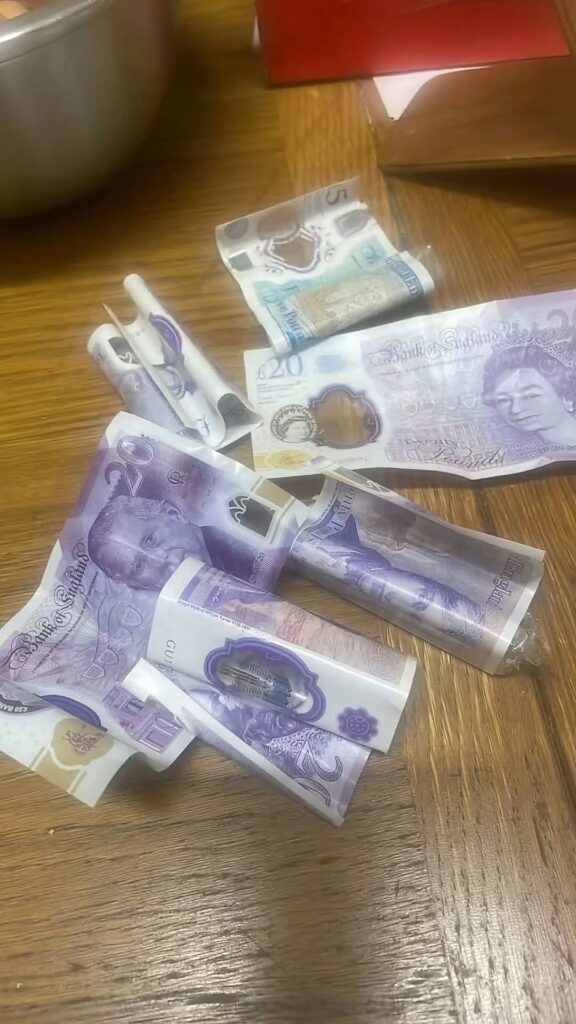
A Bargoed takeaway says it is losing money after yet more forged banknotes turned up in its takings.
Bargoed Cantonese took to social media to describe how the problem is affecting the business. The post has prompted an outpouring of support from local people.
What the takeaway said
The business told followers it has once again been handed fake money, and that the repeat incidents are hitting it in the pocket.
In the post, it wrote: “what can i say? just feeling so helpless and frustrated”
Community rallies round
Dozens of residents replied with messages of support. Some suggested practical fixes, including that delivery drivers who collect cash on the doorstep carry a blue torch to check notes before accepting them.
How to tell if a note is genuine
Forgers often copy one feature well and get others wrong, so it pays to run through several checks:
- Feel the note – on the front, the words “Bank of England” and the number in the bottom right corner should feel slightly raised and textured under your fingertips
- Check the clear window – the large transparent section should show a sharp portrait of King Charles III or Queen Elizabeth II, with the note’s value and “Bank of England” printed twice around its edge
- Look at the metallic image over the window – gold on the front and silver on the back for £5 and £10 notes, gold and blue on the front for £20 notes, and gold and green on the front for £50 notes, all with silver on the back
- Tilt it – the silver foil patch beneath the main window should switch between the note’s value and “Pounds” or a pound symbol as you move it side to side
- Use UV light – under a good ultraviolet lamp, the number on the front should glow bright red and green against a duller background
- Compare serial numbers – every genuine note has its own, so two notes sharing the same number means at least one is a fake
Common mistakes
- Counterfeit detection pens were made for old paper notes and cannot be relied on with today’s polymer (plastic) money
- Checking just one feature is not enough – if in doubt, hold the note up against one you know is real
If you think you’ve been handed a fake
- Refuse to take any note you suspect is counterfeit
- If one has already slipped through, the Bank of England will not refund you for it
- Hand the suspect note in at your local police station so it can be reported
Bank Of England





Comments
Be kind, stay on topic and keep it legal. Comments are checked automatically before they go up, and any that aren’t may be removed.
No comments yet. Be the first to have your say.