
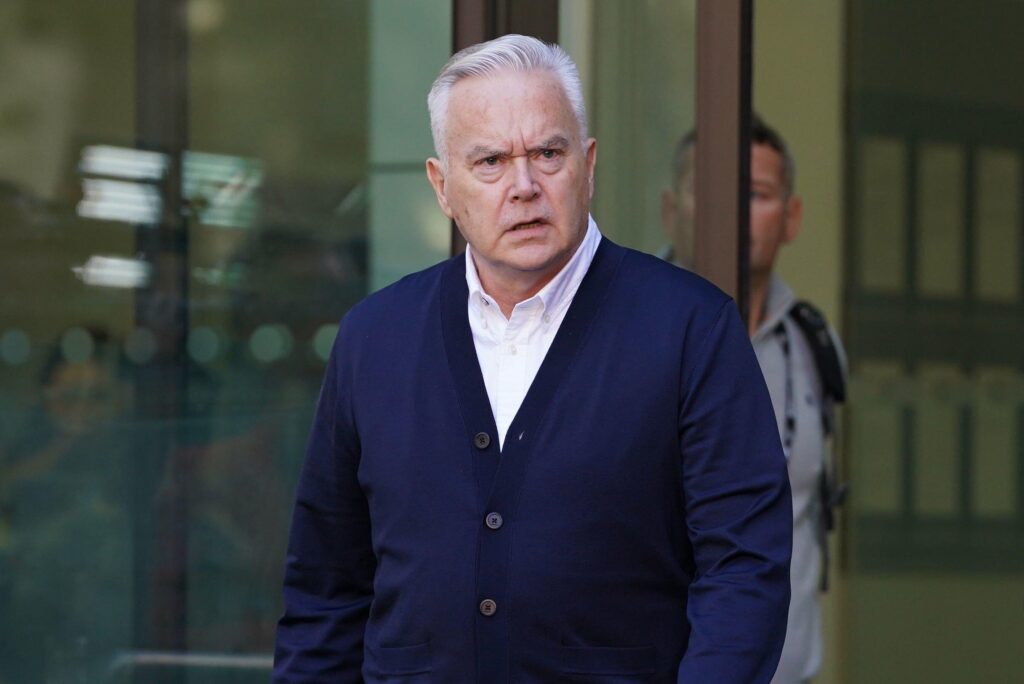
Former BBC presenter Huw Edwards has said there are days when he wishes he had never admitted making indecent images of children. He has also told the corporation he will not be handing back the £200,000 it wants from him.
According to BBC Wales, the 65-year-old made the remarks to the Observer newspaper in his first interview since his 2024 conviction. He is also set to appear in a Channel 4 documentary, Huw Edwards – Guilty, which campaigners and a broadcasting union want taken off air.
Second thoughts on his plea
Asked whether he regretted pleading guilty, Edwards told the Observer:
“Do I wake up some days and wish I hadn’t [pleaded guilty]? Yes. Of course I do.
“But I’ve got to put myself back in the shoes I was in then – family in great distress, my mum really upset, and I just thought ‘I’ve got to put a stop to this’.”
He went on:
“And I was prepared to say I’m guilty because I did click on the files, you know?”
The paper also asked why he never went to the police about the man who sent him the material. Edwards replied: “I didn’t even consider it as an option – and I’m ashamed to say it but I might as well be honest about it… I should have done it, but I wasn’t thinking in those terms. I’m thinking in terms of survival.”
He said clicking on the images had made him “complicit in this horrible trade of people”, adding: “That bit absolutely kills me.”
Edwards rejects the suggestion that the interview is an attempt to rehabilitate himself. He also told the Observer: “The fact that I’ve been convicted for a crime doesn’t erase your achievements in broadcasting.”
The £200,000 dispute
The BBC has asked Edwards to return the salary he was paid between his arrest in November 2023 and his resignation five months later. To date, he has not done so.
He told the Observer he would not repay the money for now. He would only do so if the BBC acknowledges his service and puts programmes he appeared on back into its archive.
Explaining his stance, he said:
“I just thought, you know, ‘You really think I’m gonna hand you two hundred grand if you’re calling me a liar in public?’ I mean, forget it.”
In August 2024, BBC chairman Samir Shah described Edwards as the “villain of the piece”. Shah said he “acted in bad faith” by continuing to take licence fee money while knowing what he had done.
The conviction
Edwards was once the BBC’s most senior news presenter. In 2024, he was handed a six-month prison sentence, suspended, after admitting three counts of making indecent images of children.
He admitted having:
- 41 indecent images in total
- Seven in the most serious category
- One video showing a victim aged between seven and nine
The material was sent to him on WhatsApp by Alex Williams, a convicted paedophile who was 19 at the time.
What the court heard
At his sentencing, the court was told Edwards received a video in August 2021 showing a boy aged seven to nine being abused. He responded by asking where it had come from.
Williams told him the subject was “quite yng looking”. Edwards answered that it “can be deceptive” and asked whether he had “any more?” Williams said he did, but that they were illegal. Edwards then replied: “Ah ok don’t.”
The two had been in contact over a three-year period. Prosecutors said police could not find the phone Edwards used to view the material. Officers were also unable to access any conversations or images the pair may have exchanged on platforms other than WhatsApp.
When he was arrested, Edwards answered none of the police questions. Instead, he gave officers a statement about his mental health issues.
The judge described the offences as “extremely serious offences”.
Calls to pull the documentary
Politicians and sexual abuse charities have heavily criticised the interviews.
Broadcasting union Bectu and a group of organisations representing victims of sexual abuse have written an open letter to Channel 4. They are urging it to cancel the documentary, which is scheduled for Tuesday night.
Their letter said: “Giving airtime to a convicted child sex offender is irresponsible journalism.”
Dame Jasvinder Sanghera, independent survivor advocate for victims of Mohamed Al Fayed, said she found Channel 4’s plans troubling. Speaking on Radio 4’s Broadcasting House, she said:
“He has the right to tell his story, but that doesn’t mean the public must accept his interpretation of events, nor should it come at the expense of recognising the victims.
“I find myself wondering about the children, those children in the images, what they’ve lost, and who is telling their experiences.”
On Friday, the prime minister’s spokesman said “we have no interest in hearing” what Huw Edwards has to say.
Why the interviews went ahead
The Observer ran an editorial alongside its interview. It argued there was a “public interest in re-examining his story”.
Louisa Compton, Channel 4’s director of news, said there was a clear public interest in confronting Edwards in a documentary. She said: “Nothing about making this film diminishes the seriousness of that harm, nor does Edwards’ participation entitle him to sympathy, redemption or rehabilitation.”
Comments
Comments on this story are checked before they appear. Please don’t name anyone the story doesn’t, or say anything about guilt or the evidence.
No comments yet. Be the first to have your say.