Last Updated: 8 May 2026
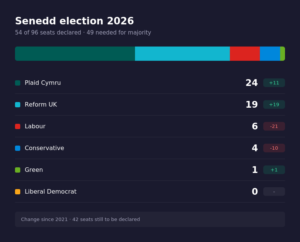
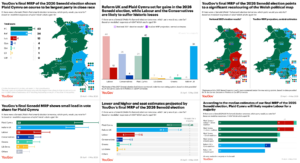
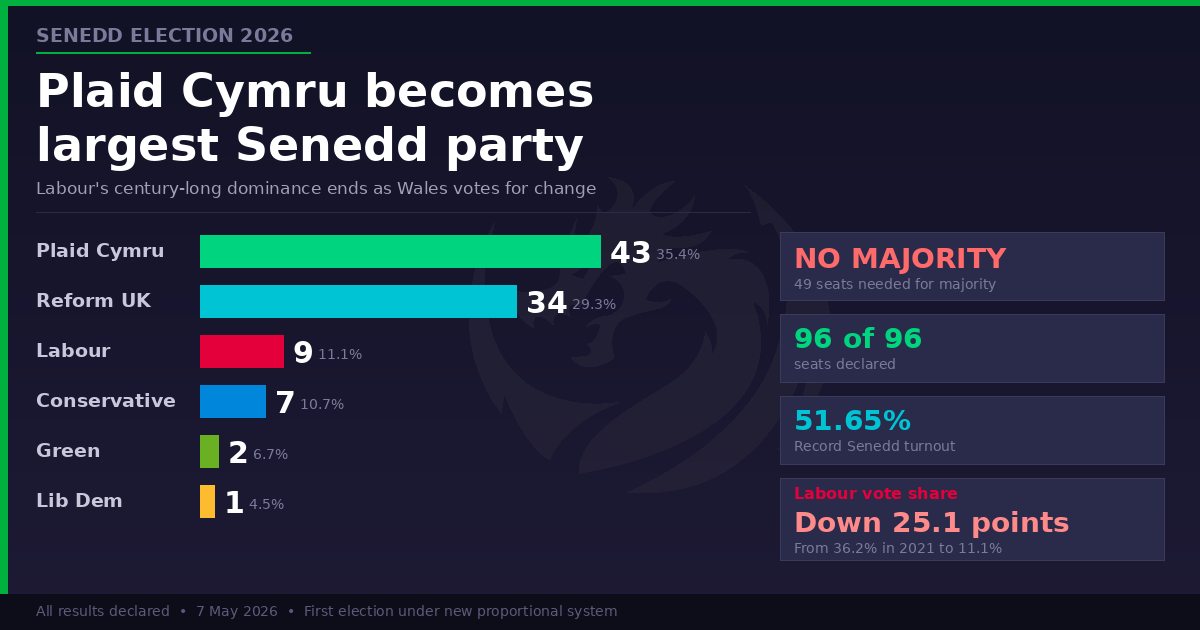
Wales has entered a new political era after Plaid Cymru secured 43 seats in the Senedd – making it the largest party in the Welsh Parliament for the first time and ending Labour’s grip on Welsh politics stretching back more than a century.
The results
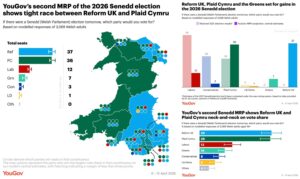
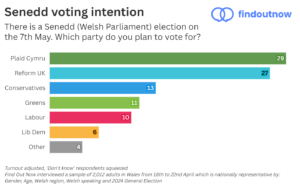
With all 96 seats declared across Wales’ 16 constituencies, Plaid Cymru took 35.4% of the vote and 43 seats – 20 more than the party held before the election. Reform UK finished second with 34 seats and 29.3% of the vote, while Labour was reduced to just nine seats after losing 35 – a collapse of 25.1 percentage points in vote share.
The Conservatives won seven seats, the Green Party secured two seats for the first time in the party’s history, and the Liberal Democrats took one.
No party secured the 49 seats needed for an outright majority.
A record-breaking election
Turnout reached 51.65% – the highest ever recorded for a Senedd election and the first time the 50% threshold has been passed. It was also the first election held under Wales’ new proportional representation system, which expanded the Senedd from 60 to 96 members.
Reaction
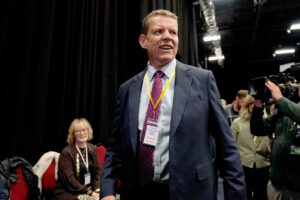
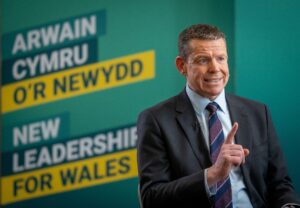
Plaid Cymru leader Rhun ap Iorwerth said after being elected in Bangor Conwy Môn: “Today is about the future of our communities here and our nation as a whole. As the story of this election has emerged today, it has become clear that Wales demanded that change of leadership, and I look forward to saying more about this later, as the full picture becomes complete.”
A Plaid Cymru spokesperson added: “This has been a spectacular result. The people of Wales have had their say and they have voted for Plaid Cymru’s positive vision for Wales.”
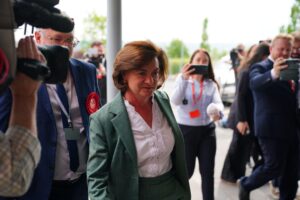
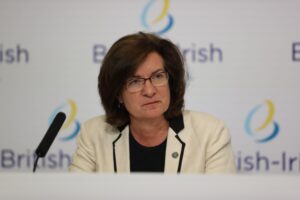
Welsh Labour leader Eluned Morgan confirmed she would be stepping down after the party’s defeat, saying: “Welsh Labour has today suffered a catastrophic result.”
What happens next
A new First Minister must be chosen within 28 days of the election. With no party holding a majority, some form of cooperation between parties will be needed. Rhun ap Iorwerth has previously indicated he would prefer to lead a minority government rather than enter a formal coalition.