Image by Folly Farm
Last Updated: 3 December 2025
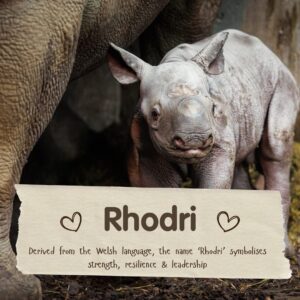
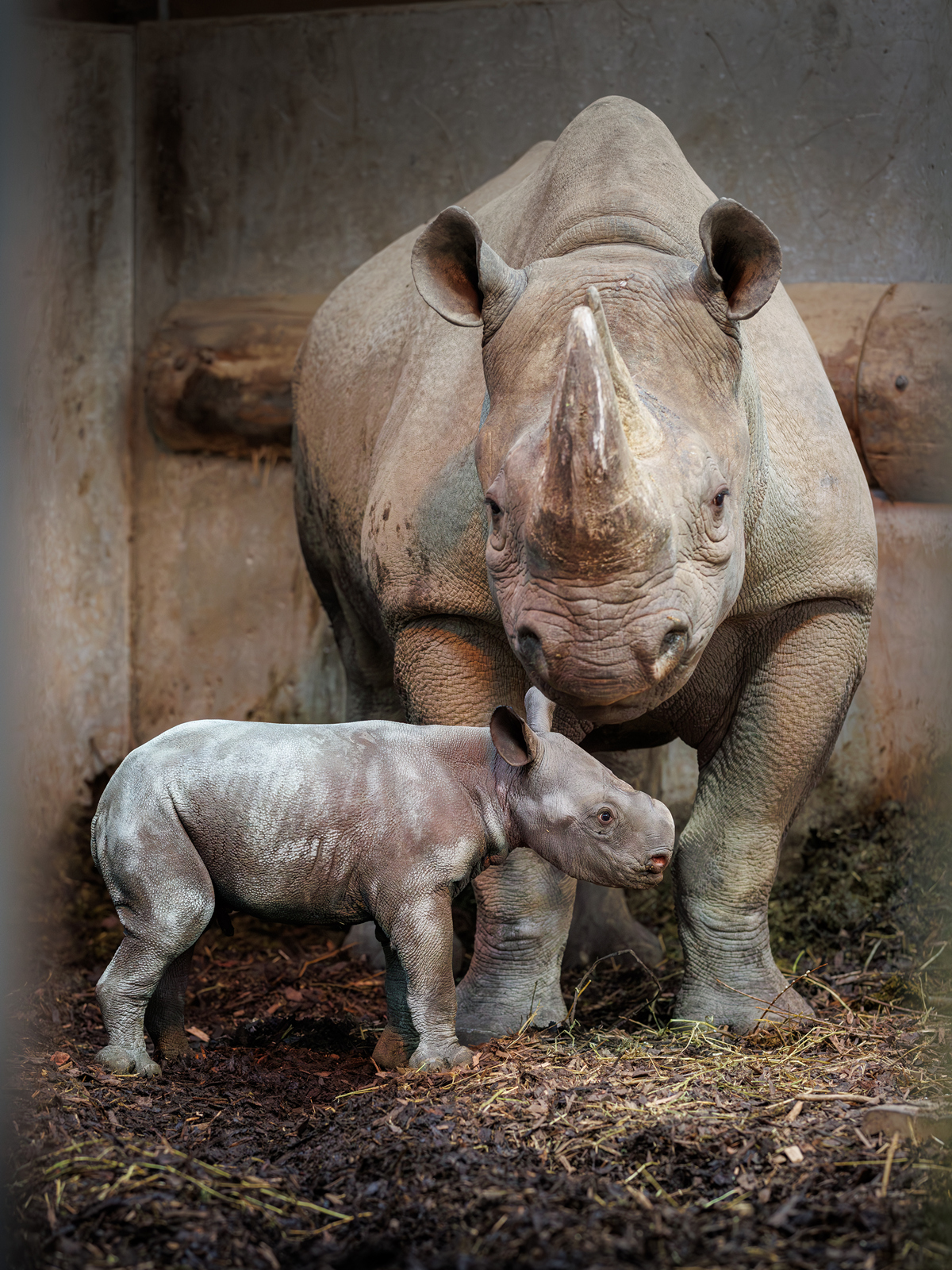
A family-run zoo in west Wales has welcomed the arrival of a rare eastern black rhino calf, born at Folly Farm in Pembrokeshire on Thursday morning.
The baby boy, who is yet to be named, was on his feet within just a few hours of birth and is the second eastern black rhino to be born in Wales as part of a managed breeding programme. The species is critically endangered due to poaching and habitat loss.
Mother Dakima delivered her “bundle of joy” early in the morning, just before keepers arrived to start their day. Jack Gradidge, conservation officer, said: “Our rhino keeper opened up the rhino house and the first thing he saw was the security camera footage, where a tiny new-born rhino was seen happily padding about the enclosure. After quietly taking a sneaky peak at the beautiful new calf to confirm what he had seen, he let the team know the happy news that the baby had arrived.”
Twelve-year-old Dakima arrived at Folly Farm in 2017 as part of the breeding programme and was paired with her mate, 14-year-old Nkosi. Their relationship quickly blossomed, and Dakima gave birth to her first calf, Glyndwr, in 2020.
Mr Gradidge said: “Dakima was a great mum with ‘Glyn’ so it’s wonderful to see these instincts are still just as strong the second time around. She’s being very protective of her new baby, showing they have a strong bond already. This is such a monumental event for all the staff here and the zoo team have worked incredibly hard to create an environment where the rhinos felt comfortable enough to mate.”
The rhino keepers will monitor mother and baby closely over the coming weeks, and they will be back out in the enclosure in due course. Visitors should not expect to see the calf for a while, but Folly Farm will be posting updates on its social media channels.
Mr Gradidge added: “For us, the next steps are just to keep an eye on Dakima and make sure the calf stays healthy and gets everything he needs from mum. Our goal is always to let nature take its course and interfere as little as possible.”
The calf could one day be released into the wild to help boost population numbers of this critically endangered species.